
Mullein and elderberry are not interchangeable. Although both are popular in seasonal wellness routines, they support different aspects of everyday health and wellness.
If you have spent any time in the natural wellness world, you have probably encountered both mullein and elderberry. They show up in similar conversations about winter wellness, respiratory support, and immune health, so much so that it can sometimes be hard to know which one to reach for, whether your family needs both, and what the difference between the two actually is.
Understanding what makes each herb unique can help you make the most of both. In this article, you'll learn what each herb does, what the research says, how the two complement each other, and when to reach for each one.
Elderberry vs. Mullein
Mullein and elderberry are not interchangeable. Although both are popular in seasonal wellness routines, they support different aspects of everyday wellness.
Mullein is a soothing, comfort-focused herb. Herbalists traditionally use mullein to support throat comfort, respiratory wellness, and the body's natural airway-clearing processes. Mullein flowers also have a longstanding place in botanical ear oil preparations.
Elderberry is an immune-focused botanical. Rich in antioxidant compounds called anthocyanins, elderberry is traditionally used to support normal immune function and the body's natural antioxidant defenses.
Together, they offer two complementary approaches to seasonal wellness: respiratory comfort and immune support.
Understanding what makes each herb unique can help you make the most of both. In this article, you'll learn what each herb does, what the research says, how the two complement each other, and when to reach for each one.
Why Herbalists Traditionally Use Mullein
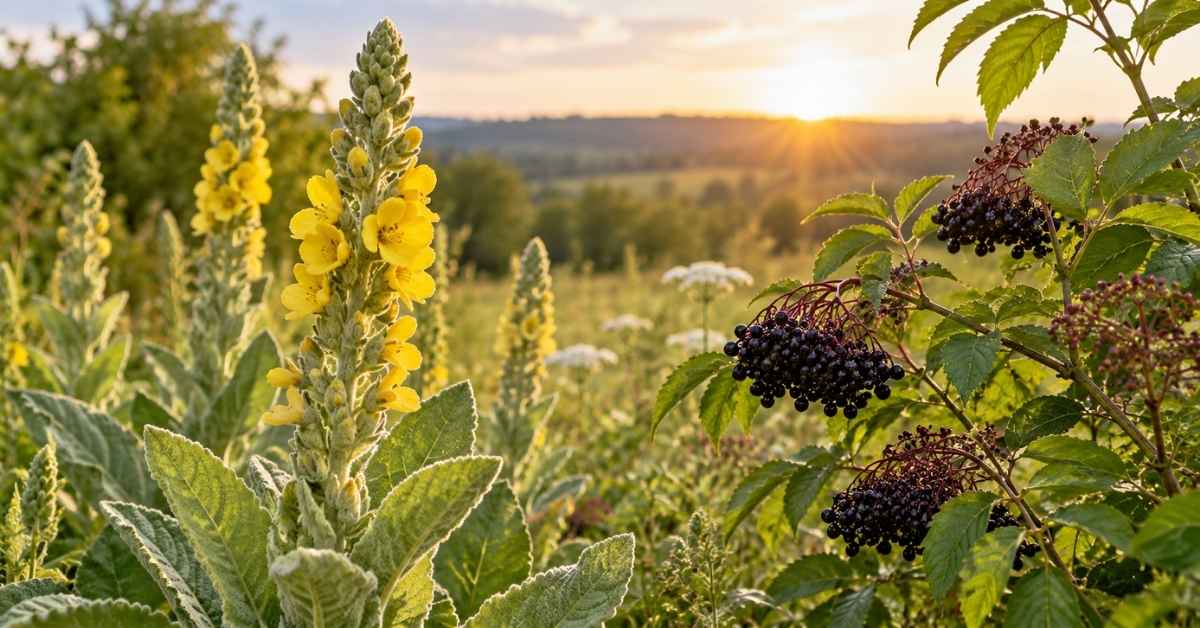
Mullein (Verbascum thapsus) has been used for centuries in traditional herbal practices, particularly for supporting the throat, airways, and respiratory system (1). Its unique combination of naturally occurring plant compounds helps explain why this herb has remained a favorite among herbalists.
Mucilage is a gel-like plant substance that gives mullein its traditionally soothing character. Mucilage-rich herbs have long been used in preparations intended to support comfort in the throat and mucous membranes.
Saponins are plant compounds associated with mullein's traditional use in supporting the body's natural mucus-clearing processes and normal respiratory function.
Flavonoids, including quercetin, contribute antioxidant activity and have been studied for their potential roles in supporting a healthy inflammatory response (1, 2).
Together, these constituents make mullein a versatile botanical for respiratory wellness.
To learn more, read this blog: What Demulcent Herbs Are (And Why We Love Them!)
When mullein is most relevant: Mullein is a wonderful herb to consider when your family wants extra throat comfort, seasonal respiratory support, or help maintaining comfortable, naturally functioning airways.

Why Mullein Also Shows Up in Ear Oil
Mullein isn't just an internal herb. Its flowers also have a long history of use in topical botanical preparations, especially ear oils. Today, mullein flowers continue to be a valued ingredient in ear oil preparations designed around traditional botanical care.
Why Herbalists Traditionally Use Elderberry
Elderberry (Sambucus nigra) is one of the most recognizable immune-support botanicals in the natural wellness world, and for good reason. These deep purple berries are packed with naturally occurring plant compounds, particularly anthocyanins, which give elderberries their rich color.
Anthocyanins belong to a larger family of compounds called flavonoids and are known for their antioxidant properties. They help explain elderberry's longstanding association with immune wellness and the body's natural antioxidant defenses (3).
Elderberry also contains other polyphenols that researchers have studied for their roles in supporting normal immune function and maintaining a healthy inflammatory response.
To learn more, read this article: Elderberry - A Natural Remedy: Benefits, Uses, & Safety Tips for Families
When elderberry is most relevant: Elderberry is a natural choice for families looking to support normal immune function, maintain antioxidant defenses, and build a thoughtful seasonal wellness routine.

How Elderberry and Mullein Work Together
One of the best things about elderberry and mullein is that you don't necessarily have to choose between them. Because they are traditionally used for different purposes, these herbs can complement each other as part of a broader wellness routine.
Elderberry supports immune wellness. Its rich concentration of anthocyanins and other polyphenols makes it a popular choice for antioxidant and immune-focused botanical support.
Mullein supports respiratory comfort. Its soothing mucilage, naturally occurring saponins, and flavonoids make it a valuable botanical in traditional throat and respiratory wellness preparations.
For families who want to support both aspects of seasonal wellness, these herbs offer complementary approaches that can fit into the same routine.
Mullein vs. Elderberry: A Quick Guide for Parents
Both herbs have a long history of traditional use, but they support different aspects of everyday wellness.
Mullein |
Elderberry |
|
Best known for |
Respiratory comfort |
Immune wellness |
Traditional uses |
Soothing the throat and supporting normal airway function |
Supporting normal immune function and antioxidant defenses |
Key plant compounds |
Mucilage, saponins, and flavonoids |
Anthocyanins and other polyphenols |
Common preparations |
Herbal drops, teas, and topical ear oils |
Syrups, herbal drops, and gummies |
Seasonal wellness focus |
Throat and respiratory support |
Immune and antioxidant support |
Are Mullein and Elderberry Suitable for Kids?
Both elderberry and mullein are popular ingredients in herbal products formulated for families, including children. One of the most convenient ways to incorporate these botanicals into a family wellness routine is through liquid herbal formulas. Glycerin-based preparations are particularly popular because they are alcohol-free, naturally sweet, and easy to incorporate into a daily routine.
Of course, not every herbal formula is designed for every age. Always choose products with age-appropriate directions, follow the individual product label, and check with your child's healthcare professional when introducing new supplements.
To learn more, read this article: How to Calculate Supplement Dosages for Kids
Summary
Mullein and elderberry are two valuable botanicals to know about when building a family wellness routine.
Mullein is traditionally valued for supporting throat comfort, respiratory wellness, and natural airway-clearing processes. Its mucilage, saponins, and flavonoids make it a unique botanical with a long history of herbal use.
Elderberry is known for its immune-supporting traditions and its rich antioxidant profile, particularly its anthocyanin content. Its botanical properties and growing body of research make it a popular choice for seasonal immune wellness.
They're not interchangeable, and they don't have to compete for a place in your family's wellness cabinet.
Whether you're focused on immune support, respiratory comfort, or a combination of both, understanding the differences between mullein and elderberry makes it easier to choose the botanical support that fits your family's needs.
related PRODUCTS


RELATED ARTICLES


References
- Gupta A, Atkinson AN, Pandey AK, Bishayee A. Health-promoting and disease-mitigating potential of Verbascum thapsus L. (common mullein): A review. Phytother Res. 2022;36(4):1507–1522. doi: 10.1002/ptr.7393. PMID: 35088467.
- Blanco-Salas J, Hortigón-Vinagre MP, Morales-Jadán D, Ruiz-Téllez T. Searching for scientific explanations for the uses of Spanish folk medicine: A review on the case of mullein (Verbascum, Scrophulariaceae). Biology (Basel). 2021;10(7):618. doi: 10.3390/biology10070618. PMID: 34356473.
Liu D, He XQ, Wu DT, Li HB, Feng YB, Zou L, Gan RY. Elderberry (Sambucus nigra L.): Bioactive compounds, health functions, and applications. J Agric Food Chem. 2022;70(14):4202–4220. doi: 10.1021/acs.jafc.2c00010. PMID: 35348337.